
Amphibians
Barred Tiger Salamander
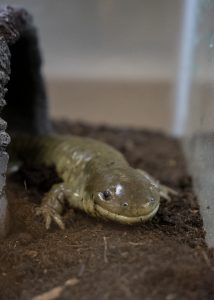 COMMON NAME: Barred Tiger Salamander
SCIENTIFIC NAME: Ambystoma mavortium
Barred Tiger Salamanders are the largest land-dwelling salamander in North America. Like all amphibians they have soft, semipermeable skin which is kept moist by a coating of mucus. They spend the first portion of their lives under water, hatching from eggs and undergoing metamorphosis.
Fun Fact: In 1994, after a campaign initiated by the students at OK Elementary School, The Barred Tiger Salamander was officially designated the Kansas State Amphibian.
LINKS TO NEWS FOOTAGE:
White’s Tree Frog
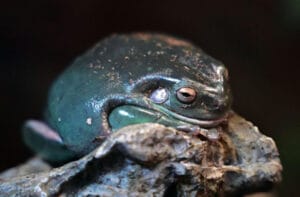 COMMON NAME: White’s Tree Frog
SCIENTIFIC NAME: Ranoidea caerulea
TYPE: Amphibian
DIET: Insects, spiders, and other small invertebrates
GROUP NAME: Army
LIFESPAN: 10–15 years in captivity
SIZE: 3–5 inches (7.5–12.5 cm)
WEIGHT: 0.5–1.5 ounces
STATUS: Least Concern
THREATS: Habitat destruction, pollution, pet trade
HABITAT: Rainforests, woodlands, and urban areas in Australia and New Guinea
BEHAVIOR: Nocturnal and arboreal; known for being calm, hardy, and excellent climbers thanks to sticky toe pads
FUN FACT: White’s Tree Frogs have a waxy coating on their skin that helps them retain moisture and survive in dry environments!
Smooth-Sided Toad
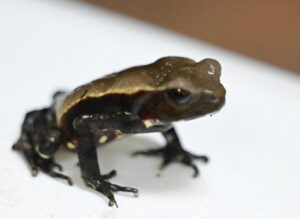
COMMON NAME: Smooth-Sided Toad
SCIENTIFIC NAME: Rhaebo guttatus
TYPE: Amphibian
DIET: Carnivore – feeds on insects, spiders, worms, and other small invertebrates
GROUP NAME: Knot (though typically solitary)
LIFESPAN: 10–15 years in captivity
SIZE: 4–7 inches (10–18 cm)
WEIGHT: Up to 2 lbs (900 g)
STATUS: Least Concern
THREATS: Habitat loss and pollution in parts of its range
HABITAT: Tropical rainforests of northern South America, often near streams and rivers
BEHAVIOR: Nocturnal and primarily terrestrial. When threatened, it secretes toxins from large glands behind its eyes to deter predators.
FUN FACT: Despite its name, the Smooth-Sided Toad has a bony ridge on its head and produces one of the most potent defensive toxins of any South American toad!